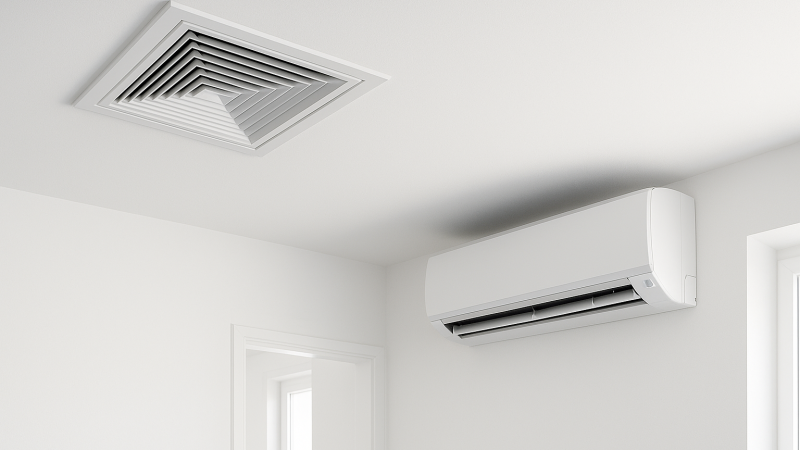
If your AC not cooling your home is the problem you are dealing with right now, you are not alone. AC not cooling properly is one of the most common HVAC complaints homeowners face every summer. Before you call a technician, there are several safe checks you can do yourself that may resolve the issue immediately — or at least help you describe the problem accurately when you do call.
Why Is My AC Not Cooling? 7 Common Reasons
Understanding the most likely causes helps you troubleshoot faster. Here are the 7 most common reasons your AC is not cooling:
1. Dirty or Clogged Air Filter
A clogged air filter is the single most common cause of AC not cooling effectively. When the filter is blocked, airflow is restricted and the system cannot transfer heat properly. Check your filter first — if it is visibly gray or clogged with dust, replace it. Most filters should be replaced every 1 to 3 months. A new filter costs $5 to $30 and takes two minutes to swap.
2. Thermostat Set Incorrectly
Before assuming a mechanical problem, verify your thermostat settings. Make sure it is set to “Cool” (not “Fan” or “Heat”), the temperature is set below the current room temperature, and the fan is set to “Auto” rather than “On.” A thermostat set to “Fan Only” will circulate air without cooling it — a common source of confusion.
3. Refrigerant Leak
Refrigerant is the chemical that absorbs heat from your home’s air. If your system has a refrigerant leak, it cannot cool effectively regardless of how long it runs. Signs include ice forming on the refrigerant lines, a hissing or bubbling sound near the unit, and warm air blowing from the vents. Refrigerant handling requires EPA certification — do not attempt to add refrigerant yourself. Call a licensed HVAC technician.
4. Dirty Condenser Coils
The outdoor condenser unit releases heat from your home to the outside air. If the condenser coils are coated with dirt, grass clippings, or debris, heat transfer is blocked and your AC not cooling issue will persist even with a clean filter. Turn off the unit at the breaker, use a garden hose to gently rinse the coils from the inside out, and clear at least 2 feet of clearance around the unit.
5. Frozen Evaporator Coils
Evaporator coils freeze when airflow is restricted (usually from a dirty filter) or when refrigerant is low. A frozen coil cannot absorb heat, so the AC blows warm or no air. If you see ice on the indoor unit or refrigerant lines, turn the system off and set the fan to “On” to thaw the coils — this takes 2 to 24 hours. Do not run the compressor while the coils are frozen.
6. Tripped Circuit Breaker
Air conditioners draw significant power, especially on startup. A tripped breaker will cut power to the outdoor compressor while the indoor air handler continues to run — blowing uncooled air. Check your electrical panel for a tripped breaker labeled “AC,” “HVAC,” or “Compressor.” Reset it once. If it trips again immediately, there is an electrical fault — call a licensed electrician or HVAC technician.
7. Undersized or Aging System
An AC unit that is too small for your home’s square footage will run continuously without reaching the set temperature. Similarly, systems older than 10 to 15 years lose efficiency significantly. According to the U.S. Department of Energy, replacing an aging system with an ENERGY STAR-certified unit can reduce cooling costs by 15 to 40 percent. If your system is over 12 years old and struggling, replacement may be more cost-effective than repeated repairs.
Safe DIY Checks You Can Do Right Now
- Replace the air filter — check and replace if dirty
- Check thermostat settings — Cool mode, Auto fan, temperature below room temp
- Inspect the outdoor unit — clear debris, rinse coils gently with a hose
- Check the circuit breaker — reset a tripped breaker once
- Check vents and registers — make sure all supply and return vents are open and unobstructed
- Inspect refrigerant lines — look for ice or frost (indicates frozen coils or refrigerant issue)
- Check the condensate drain line — a clogged drain line can trigger a safety shutoff on many systems
For more HVAC maintenance tips, see our home repair guides.
AC Not Cooling — Repair Cost Estimates
- Air filter replacement (DIY): $5 to $30
- Thermostat replacement: $150 to $350 installed
- Refrigerant recharge (professional): $200 to $500
- Evaporator coil cleaning: $100 to $400
- Condenser coil cleaning (professional): $75 to $200
- Compressor replacement: $800 to $2,800
- Full AC system replacement: $3,500 to $7,500+
See our home repair cost guides for detailed regional pricing.
HVAC Safety Tips
- Always turn off the AC at the thermostat AND the breaker before inspecting the outdoor unit
- Never add refrigerant yourself — it requires EPA 608 certification and specialized equipment
- Do not run the system with frozen coils — you risk compressor damage
- Keep the area around the outdoor unit clear of vegetation and debris at all times
For additional HVAC guidance, browse our HVAC repair guides.
When to Call a Pro for AC Repair
Call a licensed HVAC technician if:
- The AC not cooling issue persists after replacing the filter and checking the thermostat
- You see ice on the refrigerant lines or indoor unit
- You hear unusual sounds — hissing, banging, or grinding
- The circuit breaker trips repeatedly
- Your system is over 10 years old and losing efficiency
- Your energy bills have increased significantly without a change in usage
The ENERGY STAR program provides guidance on certified HVAC systems and qualified contractors in your area.
For more guidance, visit our home repair tools guide.
Frequently Asked Questions — AC Not Cooling
Why is my AC running but not cooling the house?
The most common causes are a dirty air filter, incorrect thermostat settings, frozen evaporator coils, or a refrigerant leak. Start by replacing the filter and checking the thermostat before calling a technician.
How do I know if my AC needs refrigerant?
Signs include warm air from vents, ice on the refrigerant lines, a hissing or bubbling sound near the unit, and longer-than-normal cooling cycles. Refrigerant must be added by a licensed HVAC technician — it is illegal to handle without EPA certification.
Can a dirty filter cause AC not cooling?
Yes — a clogged filter is the most common cause of reduced cooling performance. It restricts airflow, causes the evaporator coils to freeze, and forces the system to work harder. Replace your filter every 1 to 3 months.
How much does it cost to fix an AC that is not cooling?
Costs range from $5 for a filter replacement to $2,800 or more for a compressor replacement. Most common repairs — refrigerant recharge, coil cleaning, thermostat replacement — fall between $150 and $500.
Should I repair or replace my AC if it stops cooling?
If the system is under 10 years old and the repair cost is less than half the replacement cost, repair is usually the better choice. For systems over 12 to 15 years old with major component failures, replacement with an ENERGY STAR-certified unit is typically more cost-effective long-term.
Conclusion
An AC not cooling your home is stressful, especially in peak summer heat. Start with the simple checks — filter, thermostat, breaker, and outdoor unit — before calling a technician. Many AC not cooling problems are resolved with a $10 filter replacement. When the issue is beyond DIY, a licensed HVAC professional can diagnose and fix the problem safely and efficiently.
HouseFixWise provides informational guidance only. For emergencies or complex repairs, contact a licensed professional.