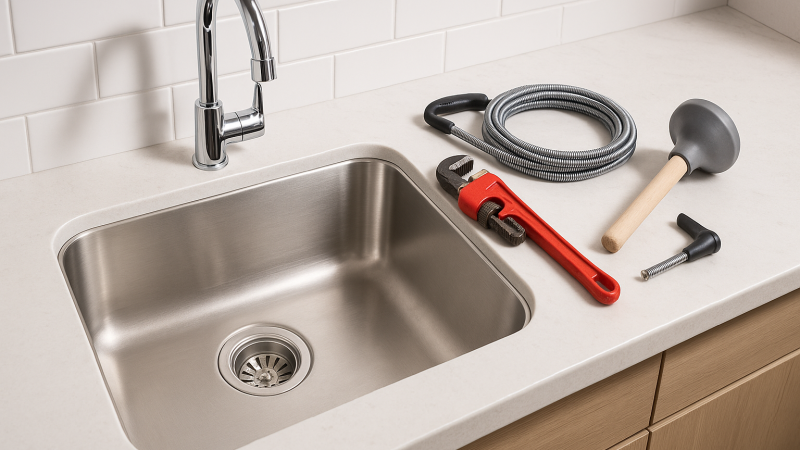
A clogged drain is one of the most frustrating household problems — but in most cases, you can fix a clogged drain yourself before spending money on a plumber. This guide walks you through 7 safe, proven methods, what to avoid, and exactly when to call a professional.
What Causes a Clogged Drain?
Before you reach for a tool, it helps to understand what is causing the blockage. The most common causes of a clogged drain include:
- Hair and soap scum — the leading cause in bathroom sinks and showers
- Grease and food debris — the top cause in kitchen sinks
- Mineral buildup — common in older homes with hard water
- Foreign objects — small items accidentally dropped down the drain
- Tree root intrusion — affects main sewer lines in older properties
According to the U.S. Environmental Protection Agency, fats, oils, and grease poured down household drains are a leading cause of sewer backups and septic system failures. Keeping them out of your sink is the single most effective prevention step.
7 Safe Steps to Try Before Calling a Plumber
Step 1: Boiling Water
Start with the simplest fix. Pour a full kettle of boiling water directly down the drain in two or three stages, pausing 30 seconds between pours. This works well on grease and soap buildup. Important: Do not use boiling water on PVC pipes — use very hot tap water instead to avoid warping the joints.
Step 2: Plunger
A cup plunger is the most effective DIY tool for a clogged drain in a sink or tub. Fill the sink with enough water to cover the plunger cup, place it firmly over the drain opening, and pump vigorously 10 to 15 times. Pull up sharply on the final stroke. Repeat two or three times if needed. For more tool recommendations, visit our home repair tools guide.
Step 3: Baking Soda and Vinegar
This natural method works well on mild clogs. Pour half a cup of baking soda down the drain, follow immediately with half a cup of white vinegar, cover the drain opening, and wait 20 minutes. Flush with hot water. The fizzing reaction breaks up soft blockages and deodorizes the drain without harsh chemicals.
Step 4: Dish Soap and Hot Water
For a greasy kitchen clogged drain, squirt a generous amount of dish soap down the drain and follow with the hottest tap water you can run for two to three minutes. The soap cuts through grease buildup and helps flush it through the pipe.
Step 5: Drain Snake (Hand Auger)
For stubborn clogs that resist the plunger, a drain snake is your best option. Insert the cable into the drain opening, turn the handle clockwise as you push forward, and rotate when you feel resistance to break up or hook the clog. Pull slowly and steadily. A basic hand auger costs $20 to $50 at any hardware store and handles most household clogs.
Step 6: Clean the P-Trap
The P-trap is the curved pipe section directly under your sink. It is designed to hold water and block sewer gases, but it also catches debris. Place a bucket underneath, unscrew the slip nuts by hand or with slip-joint pliers, remove the P-trap, clean it out over the bucket, and reinstall. This takes about 10 minutes and often resolves persistent slow drains that other methods cannot reach.
Step 7: Enzyme Drain Cleaner
Unlike harsh chemical drain cleaners, enzyme-based products use natural bacteria to break down organic matter over several hours. They are safe for all pipe types, septic systems, and the environment. Pour the recommended amount down the clogged drain before bed and let it work overnight. These products cost $10 to $20 and are available at most hardware stores.
Clogged Drain Repair Cost Estimate
- DIY methods (boiling water, baking soda, plunger): $0 to $15
- Drain snake purchase: $20 to $50
- Enzyme drain cleaner: $10 to $20
- Professional plumber — standard drain clog: $100 to $350
- Professional hydro-jetting (severe blockage): $300 to $600
For a full breakdown of plumbing repair costs, see our home repair cost guides.
What Not to Do With a Clogged Drain
- Do not mix chemical drain cleaners — combining products can cause dangerous chemical reactions and toxic fumes
- Do not overuse chemical cleaners — repeated use corrodes older metal pipes and damages PVC joints
- Do not ignore a slow drain — partial clogs worsen over time and become harder to clear
- Do not use a drain snake on a completely blocked toilet — use a toilet auger instead
DIY Safety Tips
The Centers for Disease Control and Prevention (CDC) recommends protective equipment when handling drain and plumbing work to prevent exposure to waterborne pathogens.
- Always wear rubber gloves — drains harbor bacteria and pathogens
- Wear eye protection when using chemical cleaners or a drain snake
- Turn off the water supply valve before removing any pipe fittings
- Work in a well-ventilated area when using any chemical products
For more plumbing repair guidance, browse our home repair guides.
When to Call a Professional Plumber
Call a licensed plumber if you notice any of the following:
- Multiple drains are clogged at the same time — this signals a main line blockage
- You hear gurgling sounds from other fixtures when water drains
- There is a sewage odor coming from drains or the yard
- Water is backing up into other fixtures (toilet, tub, or floor drain)
- You have tried all 7 steps and the clogged drain persists
Browse more plumbing repair guides for related help.
Frequently Asked Questions About Clogged Drains
What is the fastest way to fix a clogged drain?
A plunger is the fastest fix for most clogs. For grease-based clogs, boiling water or dish soap and hot water often clears it in minutes. A drain snake handles stubborn blockages that resist the plunger.
Can I use chemical drain cleaners on any clogged drain?
Use them sparingly. Chemical cleaners can damage older metal pipes and are not effective on complete blockages. Never mix different products — the reaction can produce toxic fumes. Enzyme-based cleaners are a safer alternative for regular maintenance.
How do I prevent a clogged drain from happening again?
Use a drain strainer in every sink and shower, never pour grease or cooking oil down the kitchen drain, and flush drains monthly with hot water. A monthly baking soda and vinegar treatment keeps buildup from forming.
How much does a plumber charge to unclog a drain?
Most licensed plumbers charge between $100 and $350 for a standard drain clog, depending on your location, the severity of the blockage, and whether the job requires hydro-jetting or camera inspection.
What if the clog is in the main sewer line?
Main sewer line clogs require professional equipment such as a motorized auger or hydro-jet. Signs include multiple slow drains throughout the house, gurgling toilets, and sewage backup. Call a licensed plumber immediately — do not attempt to clear a main line yourself.
Conclusion
Most clogged drain problems can be resolved without a plumber using the 7 steps above. Start with the simplest method and work your way up. If the clogged drain persists after trying a drain snake and cleaning the P-trap, it is time to call a licensed professional. Acting early prevents a minor clog from becoming a costly repair.
HouseFixWise provides informational guidance only. For emergencies or complex repairs, contact a licensed professional.