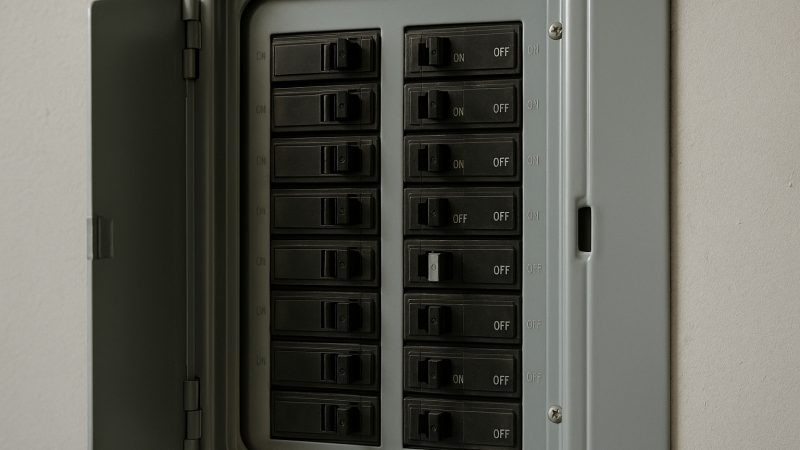
A circuit breaker keeps tripping when it detects a condition that could cause overheating, fire, or electrocution — and it is one of the most common electrical problems homeowners face. While resetting a tripped breaker is simple, a breaker that trips repeatedly is warning you about an underlying problem that could range from a minor overload to a serious wiring fault or failing breaker. This guide explains the causes, what you can safely check yourself, and when to call a licensed electrician.
Why Your Circuit Breaker Keeps Tripping
Circuit breakers are safety devices. They trip — cutting power to a circuit — when they detect a condition that could cause overheating, fire, or electrocution. A breaker that trips once may be a fluke. One that trips repeatedly is telling you something specific.
Circuit Overload
The most common cause. An overloaded circuit occurs when the total electrical demand of devices plugged into a circuit exceeds the breaker’s rated amperage. A 15-amp circuit can safely handle about 1,440 watts continuously (80% of 1,800W). Common overload culprits include space heaters, hair dryers, microwaves, and vacuum cleaners — especially when multiple high-draw appliances share the same circuit.
Short Circuit
A short circuit occurs when a hot wire contacts a neutral wire, causing a sudden surge of current far exceeding the breaker’s rating. Short circuits trip breakers instantly and forcefully. Common causes include damaged wiring insulation, loose connections inside outlets or switches, and faulty appliances. A short circuit is more serious than an overload and requires professional diagnosis.
Ground Fault
A ground fault happens when a hot wire contacts a grounded surface — a metal outlet box, a wet floor, or a person. Ground faults are particularly dangerous in bathrooms, kitchens, garages, and outdoor circuits. GFCI (Ground Fault Circuit Interrupter) outlets and breakers are designed to detect ground faults and trip within milliseconds.
Arc Fault
Arc faults occur when electricity jumps (arcs) between conductors due to damaged, loose, or corroded wiring. Arcing generates intense heat and is a leading cause of residential electrical fires. AFCI (Arc Fault Circuit Interrupter) breakers detect arcing and trip to prevent fires. If your AFCI breaker keeps tripping, take it seriously — do not simply reset it repeatedly.
Failing or Worn-Out Breaker
Breakers have a finite lifespan. An older breaker may trip at loads well below its rated capacity, or it may fail to hold a reset. If a breaker trips with minimal load on the circuit, the breaker itself may need replacement.
Circuit Breaker Repair and Replacement Cost
Understanding the likely cost helps you plan and evaluate contractor quotes.
Cost Estimates by Service Type
- Electrician diagnostic visit: $75 – $150 (service call fee)
- Single breaker replacement (standard): $150 – $300 (parts + labor)
- GFCI breaker replacement: $200 – $350
- AFCI breaker replacement: $200 – $400
- Circuit rewiring (one circuit): $500 – $1,500+
- Panel upgrade (if panel is the issue): $1,500 – $4,000+
Costs vary significantly by region, panel brand, and the complexity of accessing the wiring. Always get at least two written quotes from licensed electricians.
How to Safely Troubleshoot a Tripping Breaker
There are a few safe steps you can take before calling an electrician. These steps help you identify whether the issue is a simple overload or something more serious.
Step 1: Identify the Tripped Breaker
Open your electrical panel. A tripped breaker will be in the middle position (between ON and OFF) or fully in the OFF position. Some panels have a red or orange indicator on tripped breakers.
Step 2: Reduce the Load on That Circuit
Before resetting, unplug all devices on the affected circuit. If the breaker holds after resetting with no load, plug devices back in one at a time to identify the overloading device. If the breaker trips immediately with no load, the problem is a short circuit, ground fault, or wiring issue — stop and call an electrician.
Step 3: Reset the Breaker Correctly
Push the breaker firmly to the full OFF position first, then push it to ON. A partial reset will not restore power. If the breaker will not stay in the ON position or trips again immediately, do not continue resetting — call a licensed electrician.
Step 4: Check for Obvious Wiring Issues
With the breaker OFF, inspect outlets and switches on the affected circuit for scorch marks, burning smell, or discoloration. These are signs of a short circuit or arc fault. Do not use the circuit until a licensed electrician has inspected it.
DIY Safety: What You Should and Should Not Do
Electrical work carries serious risk of shock, electrocution, and fire. Know the limits of safe DIY action.
Safe DIY Actions
- Resetting a tripped breaker (once, after reducing load)
- Unplugging devices to identify an overloaded circuit
- Testing GFCI outlets with the TEST/RESET buttons
- Replacing a single outlet or switch (with breaker OFF and confirmed with a non-contact voltage tester)
Always Call a Licensed Electrician For
- Any work inside the electrical panel
- Breaker replacement of any type
- Wiring repairs or new circuit installation
- Any situation involving burning smell, scorch marks, or sparking
- Breakers that trip immediately with no load on the circuit
The National Fire Protection Association (NFPA) reports that electrical failures and malfunctions are a leading cause of home structure fires. Never ignore a repeatedly tripping breaker.
According to OSHA’s electrical safety guidelines, improper electrical work is a leading cause of workplace and residential injuries. Always hire a licensed electrician for any work inside your electrical panel.
When to Call a Pro for a Circuit Breaker That Keeps Tripping
Call a licensed electrician immediately if:
- The breaker trips with no load or minimal load on the circuit
- You smell burning or see scorch marks near outlets, switches, or the panel
- The breaker feels warm or hot to the touch
- The breaker will not reset or hold the ON position
- Multiple breakers are tripping simultaneously
- Your panel is over 25 years old or contains recalled brands (Federal Pacific, Zinsco)
For more guidance, explore our electrical repair resources, review our home repair cost guides, or use the HouseFixWise AI assistant to benchmark electrician quotes. Our repair guides can help you find qualified local electricians.
Frequently Asked Questions About Circuit Breakers That Keep Tripping
Is it safe to keep resetting a tripping circuit breaker?
No. Resetting once after reducing load is reasonable. Repeatedly resetting a breaker that keeps tripping can mask a serious wiring fault or arc fault that can cause electrical fires. If it trips more than once, call a licensed electrician.
Can a bad appliance cause a circuit breaker to keep tripping?
Yes. A faulty appliance with damaged internal wiring can cause a short circuit or ground fault. Unplug all devices, reset the breaker, then plug devices back in one at a time to identify the faulty appliance.
How do I know if my circuit breaker needs to be replaced?
Signs include: tripping at loads below its rating, not staying in the ON position, feeling warm or hot, or visible damage or discoloration. Breaker replacement must be done by a licensed electrician.
What is the difference between a GFCI and AFCI breaker?
GFCI breakers protect against ground faults — dangerous current leakage common in wet areas. AFCI breakers protect against arc faults — electrical arcing in wiring that can cause fires. Both are required by modern electrical codes in specific locations.
How much does it cost to replace a circuit breaker?
A standard breaker replacement typically costs $150–$300 including parts and labor. GFCI and AFCI breakers cost $200–$400 due to the higher cost of the breaker itself. Always hire a licensed electrician for panel work.
Conclusion
When your circuit breaker keeps tripping, it is a safety warning, not a nuisance. Identify the cause — overload, short circuit, ground fault, arc fault, or failing breaker — before simply resetting it again. Safe DIY steps can identify an overloaded circuit, but any wiring fault, burning smell, or breaker that will not hold requires a licensed electrician. For more help, browse our HouseFixWise tools directory or explore our full library of electrical guides.
HouseFixWise provides informational guidance only. For electrical repairs, always hire a licensed electrician.