Learning DIY drain cleaning techniques can save you $150 to $400 on a plumber service call for minor clogs. Most household drain clogs — hair in bathroom drains, grease in kitchen sinks, and soap buildup in tub drains — can be resolved with the right tools and techniques. This guide covers the most effective DIY drain cleaning methods, the tools you need, and when to stop DIYing and call a professional.
Safety Disclaimer: Always wear rubber gloves when working with drains. Never mix chemical drain cleaners with other cleaning products — combining chemicals can produce toxic gases. If you use a chemical drain cleaner, flush the drain thoroughly with water before using a plunger or snake, as splashing caustic chemicals can cause serious burns. If you smell sewer gas (rotten egg odor) near your drains, leave the home immediately and call your gas utility company — sewer gas contains toxic and potentially explosive gases.
DIY Drain Cleaning Tools You Need
Before attempting DIY drain cleaning, gather the right tools. Having these on hand means you can address most clogs without a service call:
- Plunger (cup plunger): For sink and tub clogs — $10 to $20
- Flange plunger: For toilet clogs — $15 to $25
- Hair clog removal tool (Zip-It style): For bathroom drain hair clogs — $5 to $10
- Hand drain snake (25 ft): For clogs deeper in the drain line — $20 to $50
- Drain cleaning brush: For cleaning drain stoppers and strainers — $5 to $15
- Rubber gloves: Essential for all drain work — $5 to $10
- Bucket: For catching water when removing P-traps — $5 to $10
- Adjustable pliers: For removing P-trap connections — $15 to $25
DIY Drain Cleaning Methods by Drain Type
Bathroom Sink and Tub Drains
Bathroom drain clogs are almost always caused by hair and soap buildup. Start by removing and cleaning the drain stopper — unscrew or lift it out and remove accumulated hair and soap. Use a hair clog removal tool (a thin plastic strip with barbs) to pull hair clogs from the drain opening. Insert it 4 to 6 inches into the drain, rotate it, and pull out the clog. This simple step resolves the majority of bathroom drain clogs. If the drain is still slow, use a plunger with a tight seal over the drain opening, plunging vigorously 10 to 15 times. Follow with boiling water to dissolve remaining soap residue.
Kitchen Sink Drains
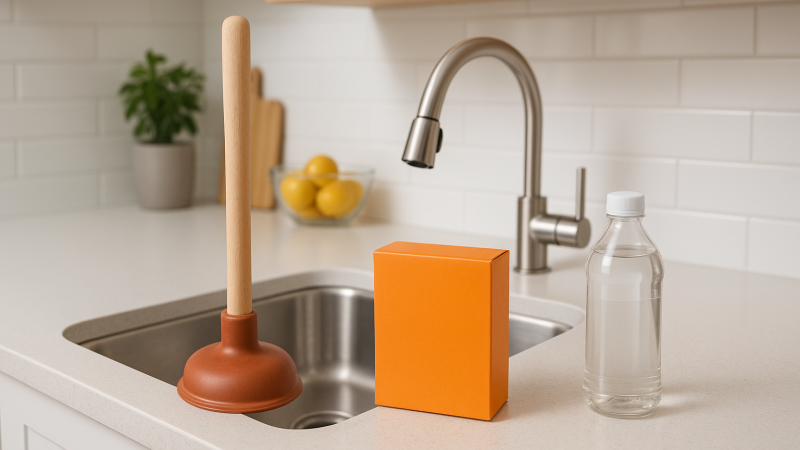
Kitchen sink clogs are typically caused by grease, food particles, and soap buildup. Start with boiling water — pour a full kettle of boiling water slowly down the drain in two or three stages, allowing it to work between pours. If the drain is still slow, try the baking soda and vinegar method: pour half a cup of baking soda down the drain, followed by half a cup of white vinegar. Cover the drain and let it fizz for 15 minutes, then flush with boiling water. For stubborn grease clogs, a hand drain snake can break up the blockage. Never pour grease or cooking oil down the drain — dispose of it in a sealed container in the trash.
Toilet Clogs
Most toilet clogs can be resolved with a flange plunger — the type with an extended rubber flap that fits into the toilet drain opening. Insert the plunger into the toilet bowl, ensuring a tight seal, and plunge vigorously 10 to 15 times. The combination of push and pull pressure usually dislodges the clog. If plunging does not work, a toilet auger (closet auger) can reach deeper clogs. Never use a cup plunger on a toilet — it does not create an effective seal. If the toilet is overflowing, shut off the water supply valve behind the toilet before plunging.
Using a Hand Drain Snake Effectively
A hand drain snake (also called a drain auger) is the most effective DIY tool for clogs that are too deep for a hair removal tool or plunger. To use a hand drain snake, insert the cable end into the drain opening and feed it slowly into the pipe while turning the handle clockwise. When you feel resistance, you have reached the clog. Continue rotating the handle to break up or hook the clog, then slowly pull the cable back out. Run hot water to flush debris. Repeat if necessary. For bathroom drains, remove the drain stopper first to give the snake direct access to the pipe. A 25-foot hand snake handles most household drain clogs; longer snakes are available for main line access but are better left to professionals.
Enzyme-based drain cleaners are a safe and environmentally friendly alternative to chemical drain cleaners for regular drain maintenance. These products use natural bacteria and enzymes to break down organic matter — hair, grease, soap, and food particles — inside drain pipes without damaging pipe materials or harming septic systems. Enzyme cleaners work slowly (typically overnight) and are not effective for complete blockages, but used monthly they help prevent buildup that leads to clogs. They are available at most hardware stores and are safe for all pipe types including PVC, copper, and cast iron.
How to Clean a P-Trap
The P-trap is the curved pipe section under your sink that holds water to block sewer gases. It is also a common location for clogs, especially in bathroom sinks where hair and soap accumulate. To clean a P-trap: place a bucket under the P-trap to catch water, unscrew the slip nuts on both ends of the P-trap by hand or with pliers, remove the P-trap and empty it into the bucket, clean the inside of the P-trap with a brush, inspect for damage or corrosion, and reinstall. This process takes about 15 minutes and requires no special skills.
For more plumbing repair guidance, see our home repair guides and cost guide library. You can also use our AI repair assistant to help diagnose your drain problem and determine whether DIY or professional service is the right approach. According to the EPA’s Fix a Leak Week program, household plumbing leaks and drain issues waste billions of gallons of water annually — regular drain maintenance helps conserve water and prevent costly repairs. For information on safe drain cleaning products, see EPA Safer Choice certified products.
When to Call a Professional Plumber Instead of DIY
Stop DIY drain cleaning and call a licensed plumber if multiple drains are slow or clogged simultaneously (main sewer line problem), if you hear gurgling sounds from drains or toilets after flushing, if water backs up into other fixtures when you run water, if DIY methods have not resolved the clog after two or three attempts, or if you smell sewer gas near any drain. These are signs of a systemic plumbing problem that requires professional diagnosis. Continuing to force DIY solutions on a main sewer line clog can worsen the problem and increase repair costs. See our local service guides to find licensed plumbers in your area.
Conclusion
DIY drain cleaning is an effective and affordable solution for most minor household drain clogs. With the right tools — a plunger, hair clog removal tool, and hand drain snake — you can resolve the majority of bathroom and kitchen drain clogs without a service call. Know when to stop DIYing: multiple slow drains, gurgling sounds, and sewer gas odors are signs that require a licensed plumber. Regular drain maintenance, including monthly cleaning of drain stoppers and avoiding grease disposal in kitchen drains, prevents most clogs from forming in the first place.