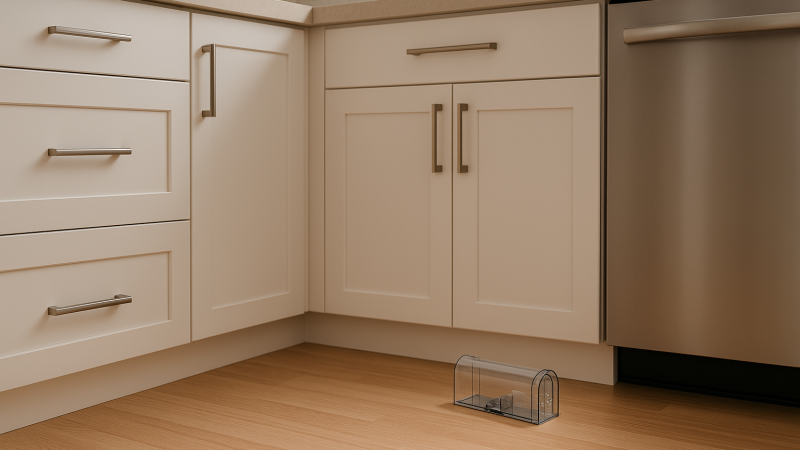
Finding a mouse in house is a common and stressful experience for homeowners. Mice can enter through gaps as small as a quarter inch, contaminate food, damage wiring, and spread disease. Acting quickly and systematically is the key to resolving a mouse problem before it becomes a full infestation. This guide explains what to do when you find a mouse in your house, how to identify signs of a larger infestation, and when to call a professional exterminator.
Mouse in House: Signs You Have More Than One
A single mouse sighting does not always mean a large infestation, but mice rarely travel alone. Here are the signs that indicate a more serious mouse in house problem:
- Droppings: Mouse droppings are small (3–6mm), dark, and rod-shaped. Finding droppings in multiple locations — especially in kitchen cabinets, behind appliances, and in pantry areas — indicates an active infestation.
- Gnaw marks: Mice gnaw constantly to keep their teeth sharp. Look for gnaw marks on food packaging, baseboards, door frames, and electrical wiring insulation.
- Nesting materials: Mice build nests from shredded paper, fabric, insulation, and other soft materials. Finding nesting material in drawers, behind appliances, or in wall voids indicates an established colony.
- Scratching sounds: Hearing scratching, scurrying, or squeaking sounds in walls, ceilings, or under floors — especially at night — is a strong sign of mouse activity.
- Grease marks: Mice travel the same routes repeatedly and leave greasy smear marks along walls and baseboards from the oils in their fur.
- Urine odor: A strong ammonia-like smell, especially in enclosed spaces like cabinets or closets, indicates significant mouse activity.
How to Get Rid of a Mouse in Your House
Step 1: Set Traps in the Right Locations
Snap traps are the most effective DIY solution for a mouse in house situation. Place traps perpendicular to walls with the trigger end touching the baseboard — mice travel along walls and will run directly into the trigger. Bait with a small amount of peanut butter, chocolate, or nesting material (cotton balls work well). Set multiple traps — at least 6 to 10 for an average home — in areas where you have seen droppings or signs of activity: behind the refrigerator, under the stove, inside kitchen cabinets, and in the garage. Check and reset traps daily.
Step 2: Seal Entry Points
Trapping removes mice already inside, but sealing entry points prevents new mice from entering. Inspect the exterior of your home for gaps around pipes, utility lines, foundation cracks, gaps under doors, and openings around HVAC equipment. Use steel wool packed into gaps (mice cannot chew through it), followed by caulk or expanding foam to seal permanently. Pay special attention to the garage door — even a small gap at the bottom is a common entry point. Hardware cloth (1/4 inch mesh) can be used to cover larger openings like vents and crawl space access points.
Step 3: Remove Food and Nesting Sources
Eliminating food sources makes your home less attractive to mice and makes traps more effective. Store all pantry items in airtight glass or metal containers — cardboard boxes and plastic bags are easily chewed through. Keep pet food in sealed containers and do not leave pet food out overnight. Remove clutter from garages, basements, and attics where mice can nest. Keep firewood stored at least 20 feet from the home. Regularly clean under and behind appliances where food debris accumulates.
Health Risks of a Mouse in House
Mice pose significant health risks that make prompt action essential. According to the CDC’s rodent disease guidance, mice can transmit hantavirus, salmonella, leptospirosis, and lymphocytic choriomeningitis (LCMV) through their droppings, urine, and saliva. Always wear disposable gloves and a dust mask when cleaning up mouse droppings. Wet the area with a disinfectant spray before cleaning — never sweep or vacuum dry droppings, as this can aerosolize the virus. Mice also chew on electrical wiring, which is a significant fire hazard. The EPA recommends integrated pest management approaches that minimize pesticide use while effectively controlling rodent populations. For more pest control guidance, see our pest control guides and home repair cost guides.
Mouse Extermination Cost
If DIY trapping does not resolve the problem within one to two weeks, professional extermination is the next step:
- DIY snap traps (pack of 6–12): $10 – $30
- Professional mouse extermination (inspection + trapping): $200 – $600
- Exclusion work (sealing entry points): $200 – $1,000
- Follow-up visits: $75 – $150 per visit
- Ongoing rodent prevention plan: $300 – $600/year
When to Call a Professional Exterminator
Call a licensed pest control professional if trapping has not reduced mouse activity after two weeks, if you are finding droppings in multiple rooms throughout the home, if you hear scratching sounds in walls or ceilings, if you suspect mice have entered the wall cavity or attic, or if you are concerned about health risks from droppings or urine. A professional can identify all entry points, set commercial-grade traps, and provide exclusion services to prevent re-entry. Find licensed pest control professionals in your area through our local service guides. Use our AI pest control assistant to help assess your situation before calling.
Long-Term Mouse Prevention Strategies
After resolving a mouse in house problem, ongoing prevention is essential to avoid recurrence. Mice are persistent — if the conditions that attracted them are not addressed, new mice will find their way in. Here are the most effective long-term prevention strategies:
- Conduct annual exterior inspections: Walk the perimeter of your home each fall — before mice seek winter shelter — and seal any new gaps or cracks that have developed. Pay particular attention to where utilities enter the home, as these penetrations often develop gaps over time as caulk shrinks and cracks.
- Maintain a clean kitchen consistently: Wipe down counters and stovetops after cooking, sweep or vacuum floors regularly, and never leave dirty dishes in the sink overnight. Even small amounts of food residue are enough to attract and sustain mice.
- Use a door sweep on the garage door: The gap under a garage door is one of the most common mouse entry points. A rubber door sweep eliminates this gap and also improves energy efficiency.
- Keep the yard tidy: Overgrown vegetation, leaf piles, and debris near the home provide cover and nesting material for mice. Keep grass trimmed, remove leaf piles promptly, and maintain a clear zone around the foundation.
- Consider a professional exclusion service: A licensed pest control company can conduct a thorough exclusion inspection and seal all identified entry points with professional-grade materials. This one-time investment typically costs $300 to $800 and provides long-term protection against rodent entry.
Consistent prevention is far less expensive and stressful than dealing with a recurring mouse infestation. For additional home maintenance guidance, explore our home maintenance tools and resources section.
Conclusion
A mouse in house requires prompt, systematic action. Set snap traps along walls in active areas, seal all entry points with steel wool and caulk, and eliminate food and nesting sources. Most minor infestations can be resolved with DIY trapping within one to two weeks. If the problem persists or you are seeing signs of a large infestation, contact a licensed pest control professional. The health risks from mouse droppings and the fire risk from chewed wiring make quick action essential. For additional pest control guidance, visit our home repair guides and home maintenance resources.
Safety Disclaimer: Always wear gloves and a mask when handling traps or cleaning up mouse droppings. Disinfect all surfaces that may have been contaminated. For large infestations, contact a licensed pest control professional. HouseFixWise provides informational guidance only and is not a substitute for professional pest control advice.