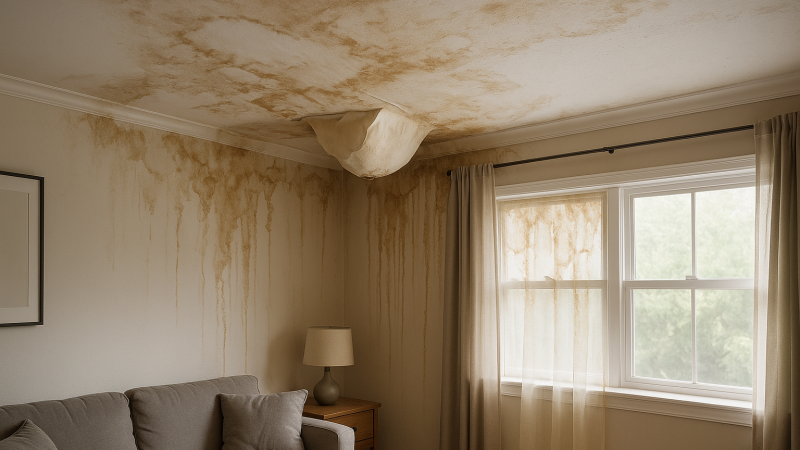
Water damage repair cost is one of the most variable expenses a homeowner can face — ranging from a few hundred dollars for a minor ceiling stain to tens of thousands for a flooded basement with mold remediation. Acting quickly is the single most important factor in keeping costs manageable. Every hour water sits in your home, damage compounds and mold risk increases. This guide breaks down costs by damage type, explains what drives the price, and tells you when to call a professional immediately.
Water Damage Repair Cost by Damage Type
Repair costs depend heavily on the source of the water, how long it sat, and how many materials were affected.
Minor Water Damage (Ceiling Stain, Small Leak)
- Ceiling water stain repair: $300 – $1,000
- Drywall patch and repaint (small area): $200 – $600
- Subfloor repair (small section): $400 – $1,200
Moderate Water Damage (Burst Pipe, Appliance Leak)
- Water extraction and drying: $500 – $2,500
- Drywall replacement (one room): $800 – $3,000
- Flooring replacement (hardwood or laminate): $1,000 – $5,000
- Insulation replacement: $500 – $2,000
Severe Water Damage (Flooding, Sewage Backup)
- Basement flood cleanup: $2,000 – $10,000+
- Sewage backup remediation: $2,000 – $15,000+
- Mold remediation (moderate): $1,500 – $5,000
- Mold remediation (severe/structural): $5,000 – $30,000+
- Full structural drying and rebuild: $10,000 – $50,000+
What Drives Water Damage Repair Cost?
Several factors determine where your repair falls on the cost spectrum.
Water Category
Restoration professionals classify water damage into three categories. Category 1 (clean water from a supply line or rain) is the least expensive to remediate. Category 2 (gray water from appliances or overflow) requires more protective measures. Category 3 (black water from sewage, flooding, or standing water over 48 hours) is the most expensive and hazardous — requiring full protective equipment, antimicrobial treatment, and disposal of porous materials.
Time Since Damage Occurred
Water damage that is addressed within 24–48 hours is significantly less expensive to repair than damage discovered days or weeks later. Mold begins growing within 24–48 hours of water exposure. Structural materials — drywall, insulation, subfloor, framing — absorb water and deteriorate rapidly. The longer water sits, the more materials must be replaced rather than dried.
Affected Materials
Drywall, insulation, and carpet are relatively inexpensive to replace. Hardwood flooring, custom cabinetry, and structural framing are significantly more costly. Finished basements with drywall, flooring, and built-ins cost far more to restore than unfinished basements.
Mold Presence
Mold remediation adds $1,500–$30,000+ to any water damage repair project, depending on the extent of growth and the materials affected. Mold inside walls, in HVAC systems, or in structural framing requires professional remediation — not DIY cleaning.
How to Assess Water Damage Safely
Before any repair work begins, you need to understand the scope of the damage. Here is how to assess safely.
Stop the Water Source First
Before anything else, stop the water. Shut off the supply valve to the affected fixture, or turn off the main water supply to the house. For roof leaks, place buckets and apply a temporary tarp if safe to do so.
Document Everything for Insurance
Photograph and video every affected area before moving or removing anything. Your insurance adjuster will need this documentation. Note the date and time you discovered the damage and the likely source.
Check for Structural Safety
A sagging ceiling is a sign of significant water accumulation above — it can collapse. Do not stand under a sagging ceiling. If floors feel soft or spongy, the subfloor may be compromised. Evacuate the area and call a professional.
DIY Safety: What You Can and Cannot Do
Some water damage response steps are appropriate for homeowners. Others require licensed professionals.
Safe DIY Actions
- Shutting off the water source immediately
- Removing standing water with a wet/dry vacuum (Category 1 only)
- Running fans and dehumidifiers to begin drying (Category 1 only)
- Removing wet rugs, furniture, and personal items
- Documenting damage with photos and video for insurance
Always Call a Professional For
- Any Category 2 or Category 3 water (gray water, sewage, floodwater)
- Any visible mold growth
- Water damage affecting structural framing, subfloor, or load-bearing walls
- Damage near electrical panels, outlets, or wiring
- Any sagging ceiling or compromised floor structure
According to FEMA’s flood resources, even one inch of floodwater can cause over $25,000 in damage to a home. Fast professional response is critical to limiting total repair costs.
The EPA’s mold cleanup guidance recommends that any mold covering more than 10 square feet be handled by a professional remediation contractor — not a homeowner with bleach and a sponge.
Does Homeowner’s Insurance Cover Water Damage Repair?
Coverage depends on the source of the water damage. Standard homeowner’s insurance typically covers sudden and accidental water damage — a burst pipe, an appliance failure, or a roof leak from a storm. It does not cover flooding from outside the home (that requires separate flood insurance) or damage from long-term neglect or maintenance failures.
- Covered (typically): Burst pipes, appliance leaks, storm-driven rain through a damaged roof
- Not covered (typically): Groundwater flooding, sewer backup (unless rider added), gradual leaks from deferred maintenance
- Flood insurance: Required separately — available through FEMA’s National Flood Insurance Program (NFIP) or private insurers
Contact your insurer immediately after discovering water damage. Most policies require prompt notification and have provisions against making permanent repairs before the adjuster inspects.
When to Call a Pro for Water Damage Repair
Call a licensed water damage restoration contractor immediately if:
- The water source is sewage, floodwater, or standing water over 48 hours old
- You see or smell mold
- The ceiling is sagging or floors feel soft
- Water has reached electrical components
- The affected area is larger than one room
- You are filing an insurance claim (a professional estimate strengthens your claim)
For more guidance, explore our water damage repair resources, review our home repair cost guides, or use the HouseFixWise AI assistant to benchmark restoration quotes. Our repair guides can help you find qualified local contractors.
Frequently Asked Questions About Water Damage Repair Cost
How much does water damage repair cost on average?
The national average for water damage repair is $3,000–$5,000 for moderate damage. Minor repairs (ceiling stain, small drywall patch) run $300–$1,000. Severe flooding or sewage backup with mold remediation can exceed $30,000–$50,000.
How quickly does mold grow after water damage?
Mold can begin growing within 24–48 hours of water exposure in warm, humid conditions. This is why immediate water extraction and drying is critical. Any water damage not fully dried within 48–72 hours carries significant mold risk.
Will my homeowner’s insurance cover water damage?
Standard homeowner’s insurance covers sudden and accidental water damage (burst pipes, appliance leaks, storm damage). It does not cover flooding from outside the home or gradual leaks from deferred maintenance. Contact your insurer immediately after discovering damage.
Can I dry out water damage myself?
For small Category 1 (clean water) damage, fans and dehumidifiers can be effective if started immediately. For any gray water, sewage, floodwater, or damage affecting walls and subfloors, professional drying equipment and moisture monitoring are required to prevent hidden mold growth.
How long does water damage repair take?
Professional drying typically takes 3–5 days. Repairs (drywall, flooring, painting) add 1–4 weeks depending on scope. Mold remediation adds additional time. Full restoration from severe flooding can take 2–6 months.
Conclusion
Water damage repair cost escalates rapidly with time — the faster you act, the lower your total bill. Stop the water source, document everything for insurance, and call a licensed restoration contractor for anything beyond a minor clean-water spill. For more help, browse our HouseFixWise tools directory or explore our full library of water damage guides.
HouseFixWise provides informational guidance only. For water damage restoration, contact a licensed remediation contractor.