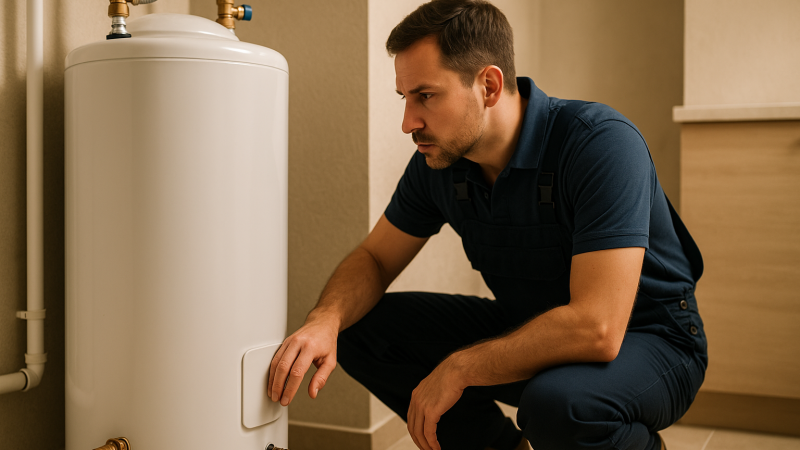
A water heater not working is one of the most disruptive home problems you can face. No hot water means no showers, no dishwashing, and no laundry. The good news is that many water heater problems have straightforward causes and affordable fixes. This guide walks you through the most common reasons your water heater stopped working, what you can safely check yourself, and when it’s time to call a licensed plumber.
Common Reasons a Water Heater Stops Working
Before calling a plumber, it helps to understand what might be causing the problem. Water heaters fail for several predictable reasons, and identifying the cause early can save you time and money. The type of heater you have — gas or electric — determines which issues are most likely.
Pilot Light Is Out (Gas Water Heaters)
On gas water heaters, a blown-out pilot light is the most common cause of no hot water. The pilot light ignites the burner that heats the water. If it goes out due to a draft, gas interruption, or a faulty thermocouple, the heater won’t fire. Many modern gas heaters have electronic ignition instead of a standing pilot. If yours has a pilot, check the manufacturer’s instructions for relighting it safely.
Tripped Circuit Breaker (Electric Water Heaters)
Electric water heaters run on a dedicated 240-volt circuit. If the breaker trips, the heater loses power entirely. Check your electrical panel for a tripped breaker before assuming the heater itself has failed. This is a quick, free fix that homeowners often overlook.
Failed Heating Element or Thermostat
Electric water heaters use one or two heating elements to warm the water. When an element burns out, you may get lukewarm water or none at all. A faulty thermostat can also prevent the heater from reaching the correct temperature. Both parts are replaceable, but the work involves high-voltage electricity and should be done by a licensed electrician or plumber.
Signs Your Water Heater Not Working Is a Serious Problem
Some water heater issues are minor. Others signal that the unit is failing and needs immediate attention. Watch for these warning signs:
- No hot water at all — complete failure of heating
- Rusty or discolored water — indicates internal tank corrosion
- Rumbling or popping sounds — sediment buildup on the heating element
- Water pooling around the base — possible tank leak or pressure relief valve issue
- Water smells like rotten eggs — bacterial growth in the tank, common in units left unused
- Unit is more than 10 years old — nearing end of typical lifespan
Water Heater Repair Cost Estimates
Repair costs vary widely depending on the type of heater, the part that failed, and your location. Here are typical ranges for common repairs:
- Thermocouple replacement: $150 – $250
- Heating element replacement: $200 – $350
- Thermostat replacement: $150 – $300
- Pressure relief valve: $150 – $300
- Anode rod replacement: $150 – $250
- Full water heater replacement: $800 – $1,500+ installed
Labor rates vary by region. Plumbers typically charge $75 – $150 per hour. Emergency or after-hours service will cost more. For a full breakdown of plumbing costs, see our Cost Guides.
Repair vs. Replace: How to Decide
A useful rule of thumb: if the repair cost exceeds 50% of the cost of a new unit, replacement is usually the smarter investment — especially if the heater is more than 8 years old. Factor in energy efficiency too — older units cost significantly more to operate than newer models.
When Repair Makes Sense
- The unit is less than 6 years old
- The repair is a single, inexpensive part
- No signs of tank corrosion or leaking
When Replacement Makes Sense
- The unit is 10+ years old
- The tank is leaking or corroded
- You’ve had multiple repairs in the past two years
- Energy bills have increased noticeably
ENERGY STAR-certified water heaters can reduce water heating costs by 10–50% compared to standard models. Learn more at ENERGY STAR Water Heaters.
How to Maintain Your Water Heater and Prevent Future Problems
Regular maintenance is the best way to avoid a water heater not working when you need it most. Most homeowners skip these steps entirely, which shortens the unit’s lifespan and leads to costly emergency repairs.
- Flush the tank annually — sediment builds up at the bottom of the tank and reduces efficiency. Attach a hose to the drain valve and flush until the water runs clear.
- Test the pressure relief valve — lift the lever briefly once a year to confirm it opens and closes properly. A stuck valve is a safety hazard.
- Inspect the anode rod every 3 years — this sacrificial rod prevents tank corrosion. Replace it when it’s less than half an inch thick or heavily corroded.
- Check for leaks around connections — inspect inlet and outlet pipes, the drain valve, and the pressure relief valve discharge pipe for drips or mineral buildup.
- Insulate the tank and pipes — an insulating blanket on older tanks and foam pipe insulation on hot water lines reduces heat loss and lowers energy bills.
DIY Safety: What You Can and Cannot Do
Some basic checks are safe for homeowners. Others involve gas lines, high-voltage electricity, or pressurized systems and should only be handled by a licensed professional. Knowing the difference protects your home and your family.
Safe DIY Checks
- Check the circuit breaker and reset if tripped
- Verify the gas supply valve is open
- Check the thermostat setting (should be 120°F for most households)
- Inspect for visible leaks around connections
- Flush sediment from the tank drain valve (follow manufacturer instructions)
Safety warning: Never attempt to repair gas lines, replace a gas valve, or work on the electrical connections inside the heater without proper training and licensing. Improper repairs can cause gas leaks, fires, or electrocution.
When to Call a Professional
Call a licensed plumber immediately if you notice any of the following:
- Water leaking from the tank or connections
- Gas smell near the water heater
- The pressure relief valve is discharging water
- Electrical burning smell or visible scorching
- The unit is more than 12 years old and failing
For plumbing emergencies, see our guide on Plumbing & Drains or use our AI Assistant to get a quick cost estimate for your situation. You can also review Repair Guides for step-by-step help on related issues.
The U.S. Department of Energy provides guidance on water heater maintenance and efficiency at Energy.gov Water Heating.
Frequently Asked Questions
Why is my water heater not working after a power outage?
Power surges during outages can trip the circuit breaker or reset the thermostat. Check your breaker panel first. If the breaker is fine but the heater still won’t work, the high-limit safety switch may have tripped and need to be manually reset.
How long does a water heater last?
Most traditional tank water heaters last 8–12 years. Tankless models can last 15–20 years with proper maintenance. Regular flushing and anode rod replacement extend the life of any water heater.
Can I use my water heater if it’s leaking?
No. Turn off the water supply and power (or gas) to the unit immediately. A leaking tank can cause water damage, mold growth, and in gas units, dangerous conditions. Call a plumber right away.
What temperature should I set my water heater?
The CDC recommends setting water heaters to at least 120°F to prevent Legionella bacteria growth, while keeping it below 140°F to reduce scalding risk. Most households do well at 120°F.
Is it worth repairing a 10-year-old water heater?
Generally, no. A 10-year-old unit is near the end of its lifespan. Unless the repair is minor and inexpensive, replacement with a newer, more efficient model is usually the better investment.
Conclusion
A water heater not working is stressful, but most problems have clear causes and solutions. Start with the simple checks — breaker, pilot light, thermostat — before calling a plumber. If the unit is old, leaking, or has failed multiple times, replacement is likely the smarter long-term choice. Regular maintenance — annual flushing, anode rod checks, and pressure relief valve tests — can add years to your unit’s life. When in doubt, a licensed plumber can diagnose the problem quickly and give you an accurate repair or replacement estimate. Visit our Local Guides to find cost information specific to your area.
HouseFixWise provides informational guidance only. For emergencies or complex repairs, contact a licensed professional.